The Heart of the Machine with Søren Bendt
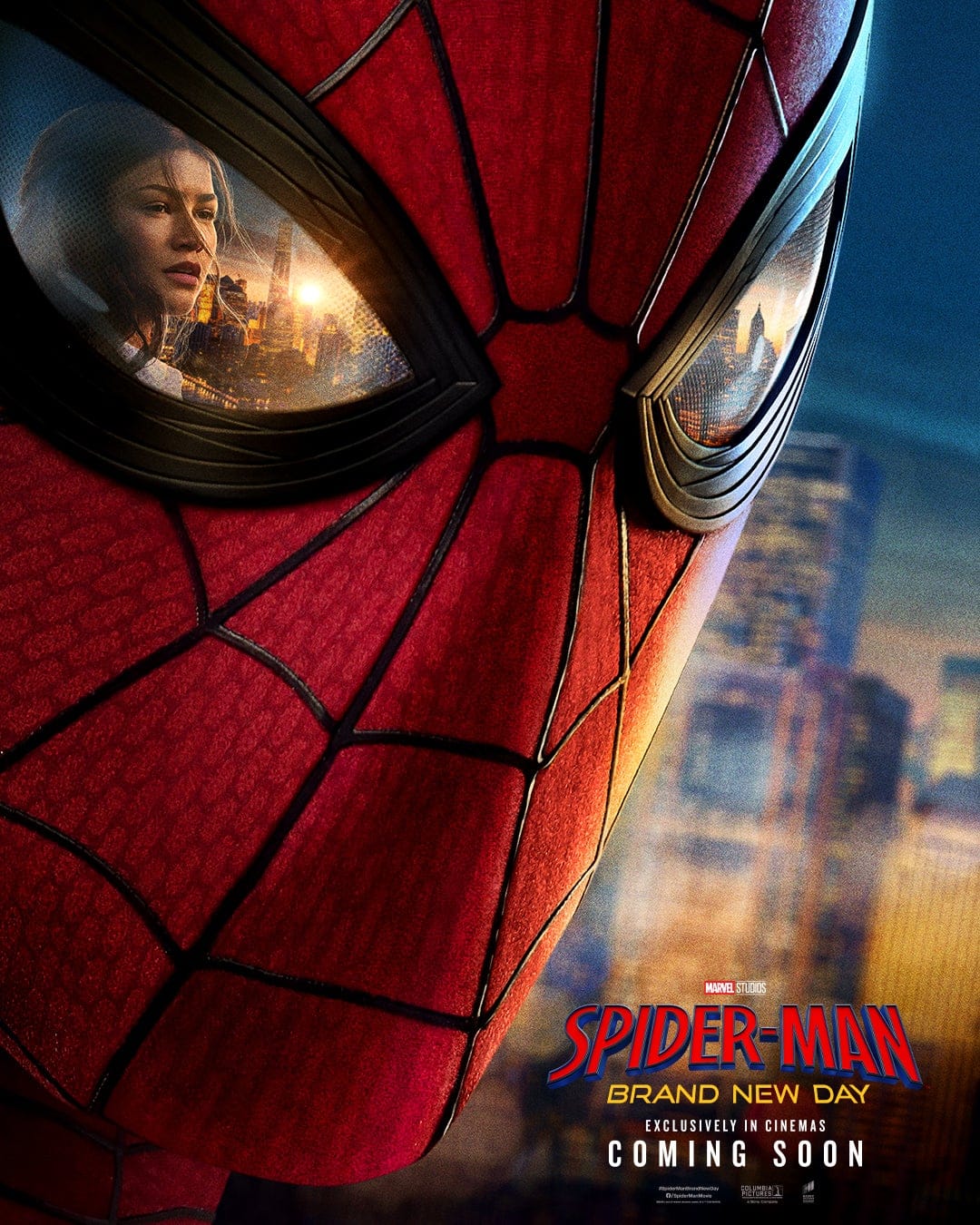
For nearly 20 years, Søren Bendt has worked as a storyboard, VFX, and concept artist on some of the biggest projects in the world, with credits like Doctor Strange in the Multiverse of Madness, The Lord of the Rings: Rings of Power, and, most recently, Spider-Man: Brand New Day.

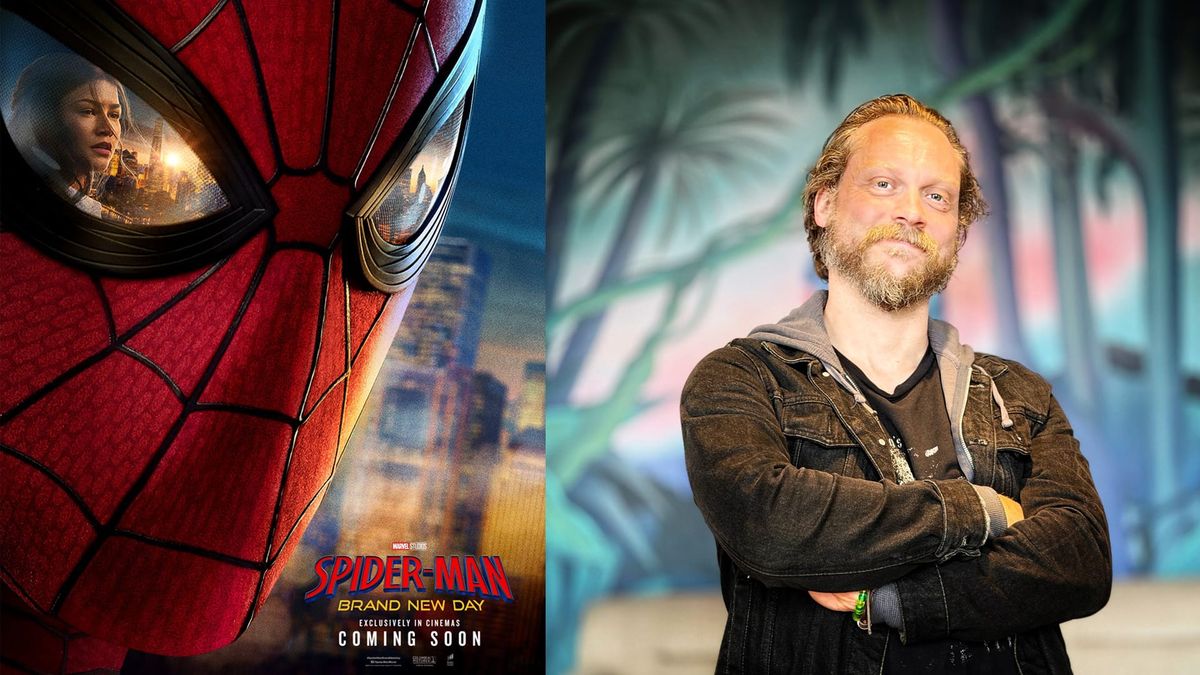
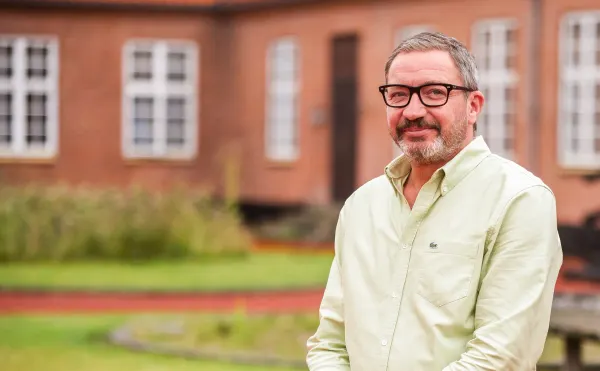
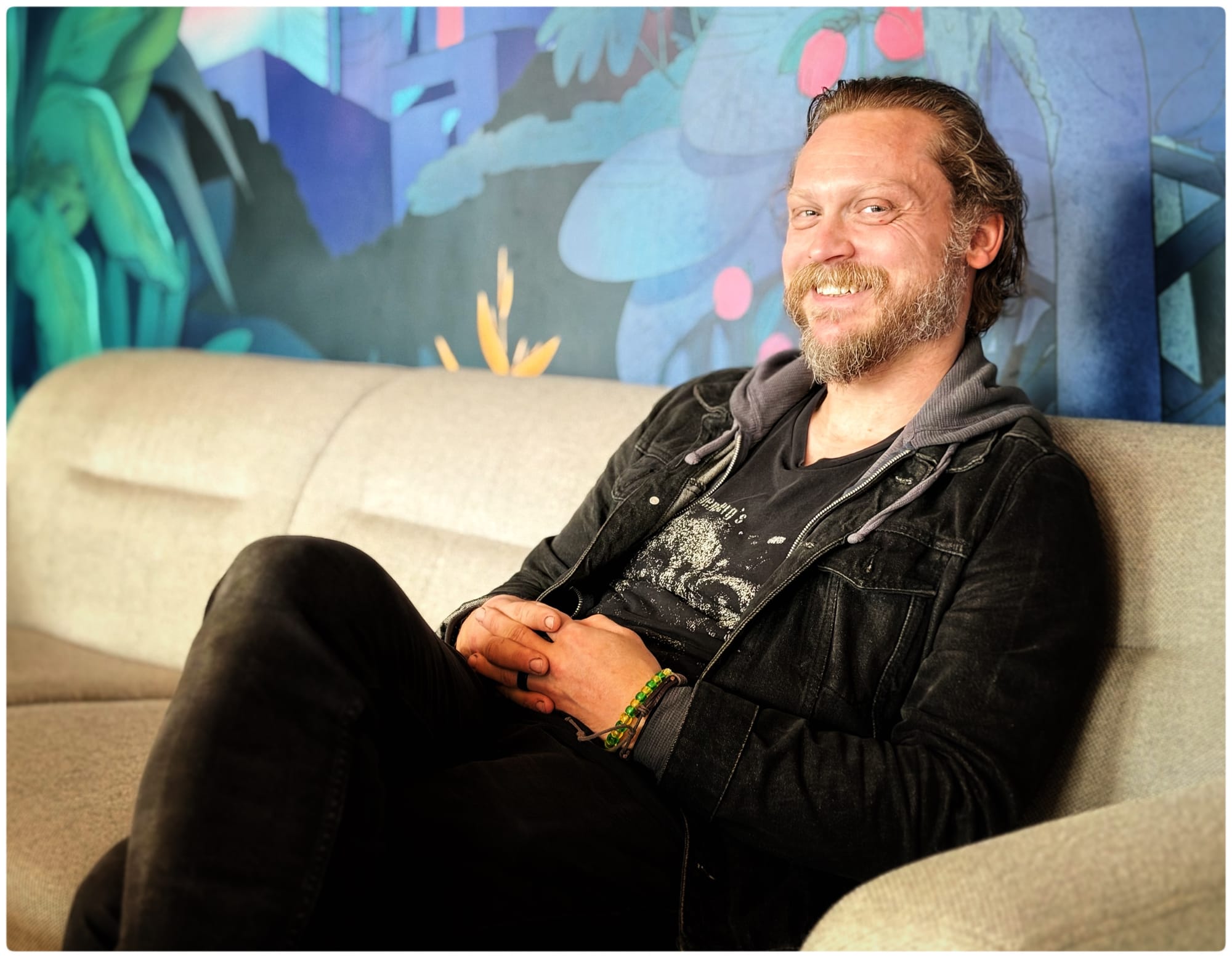
WeAnimate met Søren Bendt at Arsenalet in Viborg. Just last week, The Concept Art Association CAA nominated him as a Live-Action Storyboard Finalist 2026 for his work on Spider-Man: Brand New Day. For nearly 20 years, Søren Bendt has worked as a storyboard, VFX, and concept artist on some of the biggest projects in the world, with credits like Doctor Strange in the Multiverse of Madness, The Lord of the Rings: Rings of Power, and, most recently, Spider-Man: Brand New Day. He has recently returned to Denmark and started an office in Viborg. In this remarkably candid interview, he talks about his journey from The Animation Workshop to feature films, his approach to storyboarding, and his experiences in the industry.
SB: I’m not usually interviewed. I’m just a guy in a machine room, down here with a wrench. There’s nothing very high or pretentious in my role.
WA: Let’s just talk a bit about your journey from being an animation grad to being a storyboard artist for live-action films.
Book Ticket Here
SB: Yes. I studied at The Animation Workshop, doing 2D and 3D animation. At that time, I was really inspired by Star Wars, and wanted to be a director. Honestly, I wanted to direct the next Star Wars movie, but I also just wanted to know what it would be like to work on really big projects.
I got an internship in San Francisco, at a game studio called Double Fine. I loved it. I was an animator on a video game called Brutal Legend, and it had Jack Black in it, and it was so cool. I always found 3D to be an amazing tool, but when I saw people doing concept art I really felt like that was what I wanted to do. I had a lot of ideas around concept art, and they were receptive to my ideas. One of the great things about that studio is that they didn’t really pigeonhole people, so there was room to move around and explore. They had quite a few people from Pixar who had left for exactly that reason: they had been pigeonholed and wanted to branch out more. That was really informative for me; the idea that a studio could allow you to move and grow.
Everything at Double Fine went really well, and they were talking about how perhaps I could work there, and I was so excited to go work in San Francisco. But it turned out that I couldn’t get the green card. I was just out of uni and didn’t have a lot of experience, so they couldn't really argue that there was a compelling reason to hire me, rather than a local. So that didn’t happen. But I still had this urge to go - I always felt a kind of calling to leave Denmark and go somewhere else.
So I was really disappointed when I didn’t get the visa, and felt like maybe I had missed my shot. Previously, I had done a little test at A. Film, and it’s not that I didn’t appreciate the idea that I could have a job in animation here in Denmark, but I was just so enamored with the idea of traveling abroad and working on big international projects… There was a whole sense of adventure that was inspiring. And I felt like if there was a time, that was the time to do it. So I didn't work with A. Film, and I got into a bit of a slump.
Then one of my classmates, Rasmus Møller, reached out. He had gone to London and was working for Cartoon Network, and I think perhaps he had enough of my whinging. So he sent me a list of like 40 companies that he had made, and told me that I had to send an email to all of these companies. Eventually I very reluctantly did it, grouching the whole time. I only got one reply. Framestore was doing a feature at the time called The Tale of Despereaux, and they were looking for a rough layout artist.
The Animation Workshop taught us a lot of different skills, but I think today there is much more awareness of all the different disciplines within filmmaking. At the time, I didn’t really know exactly what a layout artist was, but I did an interview with a guy named Brad Blackburn, who I think was also doing some layout supervision on Shrek, and that was the kind of project I definitely wanted to try.
I wanted to know what it was like to be behind the scenes and work on huge films, and find out how they do it. The answer, of course, is that they do it exactly the same way as a tiny production, with the same problems. It’s always the pipeline and those kinds of things. But I got into the 3D rough layout department, and it was actually a really good place for me in terms of later becoming a storyboard artist.
In rough layout, we would get the 2D storyboards and do a basic breakdown of what they might look like in 3D. So you’re interpreting the storyboards, but you are also choosing very specific things, like lenses. I had never done photography, and hadn’t really done anything with lenses; in my own short film I had changed the lens, but just kind of intuitively. I never had a cheat sheet, like “for this kind of emotional impact, choose this lens,” so a whole new world opened up. In The Tale of Despereaux, the characters we had were all rats and mice, so their noses were really long, which actually doesn't look very good with a wide lens, because their eyes get small and their faces less appealing. Generally the characters needed to be shot with long lenses, to compress their faces a bit. But the long lens also flattens the backgrounds, and they wanted the world to feel very big, because these are small characters in a large space. So the backgrounds need to have a wide lens, so you have to figure out how to make these lenses work with the emotional impact. That was super informative, and I learned so much from Brad, making the camera work more like a real-life camera does.
All these camera skills tend to go under the radar when you are studying animation; you don’t always create things that really feel cinematic. In 3D it’s possible to make the camera move in ways that are kind of uncanny, doing things the physical world wouldn’t allow. You end up needing to think of the camera as a character, and making it move more like it does in a film. Unless you want to call that into question, and start to change the language of film around camera decisions, which a new generation may want to do.
Book Ticket Here
So I did rough layout at Framestore for about a year and really enjoyed it. There was a lot of talk about how Universal was going to build a new partnership with Framestore and we were going to make a second film after Tale of Desperaux… but as the film was starting to wrap up, the next one wasn’t starting up, and where were all the people who worked on it supposed to go?
When you are fresh out of uni, you are more focused on the present, jumping into every opportunity, and you aren’t really aware of these kinds of changes. So they let us all go from Framestore very suddenly, and I learned the hard way that that’s just how the industry goes. Later I would learn that there are about 3 or 4 major VFX houses in London, and senior people just bounce around between these companies in a kind of cycle. So a friend of mine got a job at MPC and recommended me, and I got a job there too.
Although I wanted to work on something big, and I wanted a peek behind the scenes, to find out what it’s like to play my trumpet in a big orchestra (it turns out that it’s a lot like playing the trumpet in a small orchestra; there’s just a lot more trumpets around), I didn’t want anything specific in terms of my role. It was just exciting to learn all these new things. Of course my inner ambitious 12 year old still wanted to direct the next Star Wars, but I really just wanted to be part of it. I really liked rough layout, and sometimes I would try to do a bit of animation, but my animations just weren’t as good as the “real” character animators. I could tell that I had more skill for cinematography, for staging, and I would kind of run out of stamina with animation.
I’m not that great of an animator, actually; it was pretty hard for me. The sheer drawing skills required for good solid 2D animation are just so demanding, and my craftsmanship just wasn’t there. I was struggling to learn animation, but I was honestly struggling to simply draw the thing I wanted to animate. I think that’s where 3D helps sometimes, if you are wrestling with perspective and anatomy and animation on top of it. That’s why you start with a bouncing ball. But if you are ambitious, and want to also do the acting, it’s very tough.
Also, when I was doing an animation, I would usually have a sense for whether it was good enough or whether it was how I wanted it to be. Then, if someone told me to change the eye blink by 2 frames, it would make me really furious. Taking feedback on animation just didn’t work for me. It felt a bit like a personal attack. If I’ve animated something, I have done it, and that’s how it should be. Also it was really difficult for me, so I don’t want to change it. It’s hard to just try this or try that: it takes a whole day of watching playblasts. Whereas in layout, everything is kind of rough, so if someone suggests making a change or something, it’s easier to just try doing it that way. It feels less personal. Working on long sequences in layout gave me a sense that I was actually making a movie, which fit better with what I can do and what I like to do.
Then I got into previs. Previs is kind of like doing a storyboard in 3D, but it has a lot more technical aspects to it. And I had gotten good at Maya, but it started to become clear that either I had to learn programming and scripting, or I had to get back toward art. My job was turning into math, and, like a lot of artists, I drew so much as a kid because math was not my thing. But I realized that my craftsman skills were too far from where they needed to be in order to do what I wanted to do. I needed to get back to basics.
So at MPC they had a life drawing class once a week, and I would go. And I started going other places to do life drawing. Life drawing life drawing life drawing. Then the guy who arranged the life drawing left the company, so I got the contact info of all the models, and I started sending the email, and I became the guy who arranged the life drawing. It really became my thing.
Of course the journey to improve your skills never ends, but all that drawing really propelled me forward. Drawing the gestures just gives me something special. It’s physical, on paper, away from the computer. The computer is magical, but sometimes you think, “Am I doing this to the computer, or is it doing it to me?” Whereas with the paper, it’s me doing it with the paper.
Unfortunately, I also suck at color, so my concept art was struggling. An email went out at MPC looking for people to join the concept art department, and everyone in my layout team prodded me, because I had become the guy who spent every lunch break painting something, and doing life drawing and sketch crawls after work.
One thing I learned during that time is that you really have to show what you want to do. You have to be honest and verbalize these things, which can be scary, especially if you are young and inexperienced, because it comes with the possibility of rejection. If you ask someone to let you do something, they can always say no. I ran into a lot of people at those life drawing classes who wanted to be concept artists, but nobody ever knew. So I kept my sketchbook around and surrounded myself with those things, which made it easy for people to understand what I really wanted.
I was nervous about trying to be in the art department, but they told me I could just go and sit there and learn how it worked. I sat with some really great artists, and got a little taste of it. And even though I wasn’t as good as those guys, I felt like I could do that. I could make contributions that bear fruit. My drawings went into dailies, and that was a huge boost for me. But then I was kicked back into layout when that was done.
Then my old boss Brad reached out and said that he was starting a new previs/development type of thing at Double Negative. He knew what I was working toward, since I was open about it and kept a blog and everything, and he was always very much into drawing little thumbnails and very encouraging of drawing. I kind of felt like I had reached a dead end at MPC, and I wanted to try something different.
So we started this previs thing at Dneg, and at the time it was very bare bones. But that was a neat little place for me to be, where I was drawing and I did a lot of different things, mostly focused around previs. I think Dark Knight Rises was the first project we did, and I was so excited to be working on a Batman movie. I mean, that’s part of it for me: meeting these directors, talking with them, seeing it all take shape - it’s so exciting.
WA: You’ve worked on some huge movies.
SB: Yes, it’s kind of amazing looking back on it. I am thinking a lot about this, because I just got an office at Arsenalet, and I’m back in Viborg a couple days a week. And it very quickly puts me back in my student shoes, from like 20 years ago. It’s such whiplash. We went and saw Spiderman there, and it felt like I worked on it in some other life, some other Søren in the UK. It’s so hard to connect that, standing with my two feet in Viborg, and thinking about what I’ve really done.
For me, the big turning point was Captain Phillips. I was leading the film’s previs team on these sequences, and we were exploring these ships, figuring out how to film various shots. Because Brad and I both come from animation, everything was always focused on a sequential workflow: you’re not just solving the technical problem of mounting a camera on a boat, you are focused on telling the story. But once you have one shot and another shot after it, you have to start making story decisions. As soon as you create a sequence of things, and shots start matching up, some options start to be eliminated.
It was also technically complicated to allow people to work on sequences, so it was always one artist for one shot, and nobody had any context, or any way to judge how things were working. It was very technically challenging, and we were running really low on time, so we started focusing on the workflow.
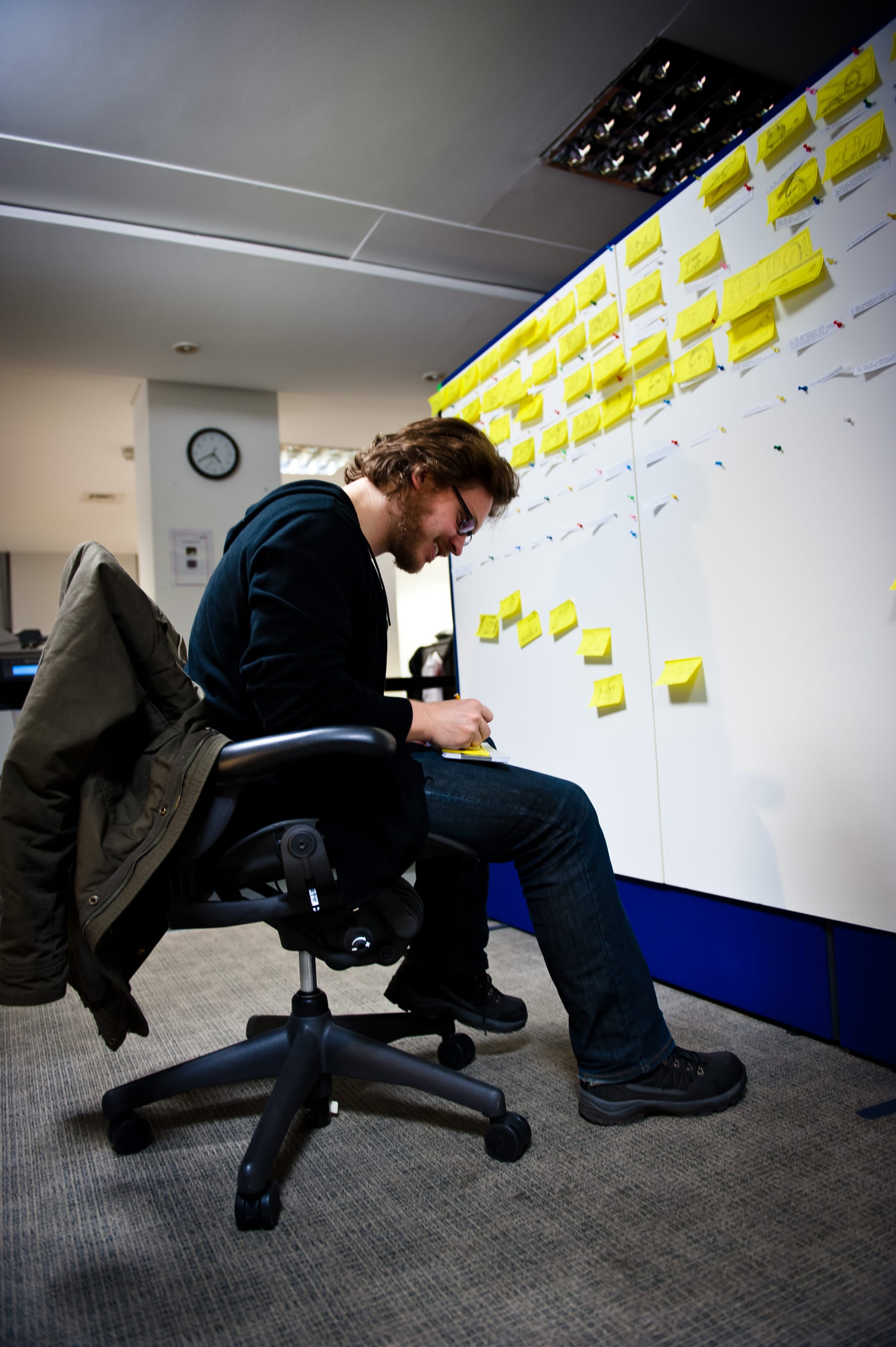
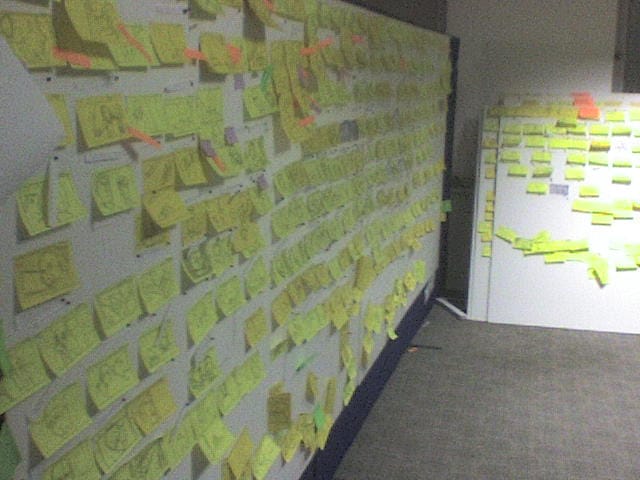
I found that the easiest way for me to delegate the work and make things more efficient was to start drawing storyboards on post-it notes. I drew the whole sequence and went over it with Brad, and then we could all stand together and look at it. And because it was just a post-it note, I could pull it down, make some changes, and put it back up. It was very exciting for people to understand what was going on, and they also started coming up with their own ideas, so even people who didn’t draw still felt like they were part of it. Then we could distribute the post-it notes, and everyone knew how their shots fit into the whole. We had these big walls with all the sequences on them, and we could move them around depending on what we are working on, going from storyboards to previs. We started to have a little kind of animation-ish pipeline. It helped grow us as a team, and made us excited about the story, and gave us a lot of momentum.
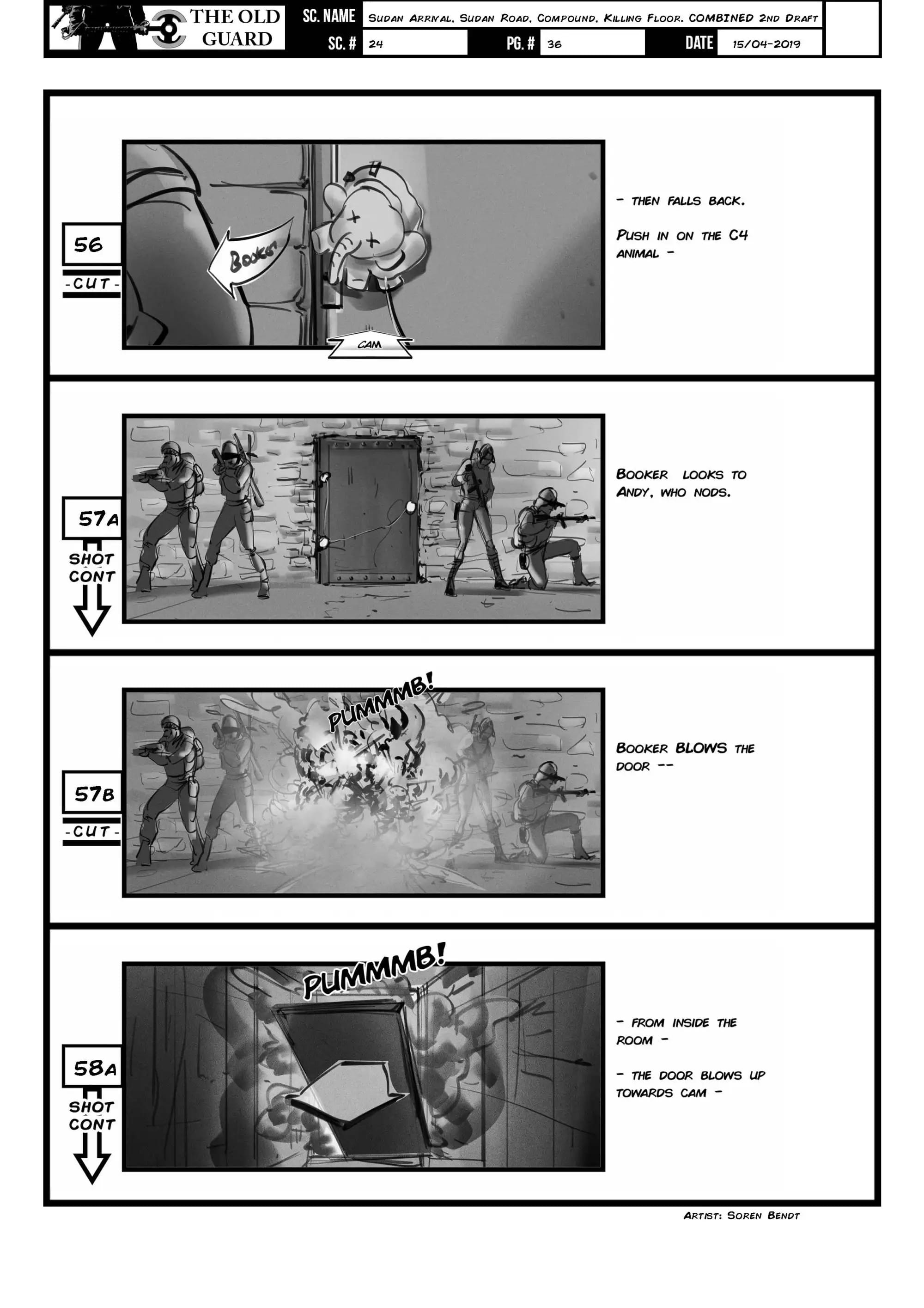
When the editor on Captain Phillips came in and saw all these walls and walls of post-it notes, he would suggest that perhaps it should go like this, and he would edit the walls. And that’s awesome, because now he’s collaborating and taking ownership. It stops being the thing that I’m doing and becomes the thing that we are doing.
Then what happened is that we couldn’t previs the whole thing - it was just too big. And the day came to present it to Paul Greengrass. And they really liked that we had the whole sequence in place, but a lot of it was just still scanned post-it notes with arrows on them, cut in with playblasts.
In the past, editorial always replaced missing shots with a title card that said something like “Wide Shot of Ship”. I had noticed that whenever we had clients or directors reviewing a sequence, as soon as those title cards popped up, they would look away. The spell is broken. The text is informative and useful, but even the crappiest sketch is more visually engaging than text on the screen. So Brad suggested using the drawings instead of the title cards. I was so nervous, because now my drawings, instead of being in the little safe haven of my team, were going out there to be seen by everybody.
Book Ticket Here
So when Brad had the big meeting with Paul Greengrass and some of the company leadership to review the sequences, he suggested that I come along. So I got to meet the director, and he was so sweet. You could see him thinking about his whole movie, because we were kind of offering up a version of it, in the way we were solving some of the technical challenges. But I think also because they were just on post-it notes, just little scribbles, it didn’t feel like we were taking over the movie. And he said, “Let’s just do the drawings.” I was so surprised, because the drawings were an excuse for the missing shots, but he was satisfied with the drawings. So they asked if I could do it, and of course I immediately said yes. That was the first real moment of change. After the meeting, I was no longer leading the previs team: I was suddenly storyboarding the movie. They handed me the full script, and it was huge. But everyone really liked visualizing the whole film in that way, rather than just focusing on the VFX shots. It was more inspiring.
Ultimately, I think my job a lot of times is bringing these gifts to the director, hoping that they like them. When I said I wanted to direct the next Star Wars movie, I didn’t really understand what directing a movie was. It’s so demanding. The luxury of just enjoying the story barely exists for them, because they are managing so many things, and operating on a whole other level. So here are my innocent, exciting little post-it notes.
WA: What is the difference between working on big movies and small movies?
SB: I never worked much on small movies. I’m actually curious about that, because I’ve come back to Denmark now, and I’m wondering if I will work in the local industry or not. I’m not entirely sure.
Of course you run into the same exact problems, as I’ve said. The pipeline never works. The pipeline is always a mess. The script is never locked in, because someone always has a new idea. And for a long time I was very focused on that kind of thing, trying to understand how I could fix it, trying to pinpoint the problem, and make things more efficient. But that IS the process. And I’ve learned that I actually really like this process, often more than I enjoy the final result. I like the aspect of exploring and imagining, rather than just executing on a deadline.
I’ve talked with my Danish animation friends, and it’s amazing that we always end up kind of moaning and bitching about the exact same things. And as long as there are humans involved, it’s always going to be that way. So much of the problems are in how people communicate. Collaboration is the key.
Every movie is different because every director is different. Every time I have a meeting for a new project, it’s not even really an interview. It’s more like we are feeling each other out, to see if we can work together. And yes I would like the job, because I want to work, it’s important for existing, but there is an element of needing to feel a click, feeling like you understand them. So I do a little presentation about how I tend to work, but I also point out that every director is different, and also different sequences are different. Maybe one sequence has a lot of motion or energy, or maybe they want a different workflow, and you have to feel it out as you go along.
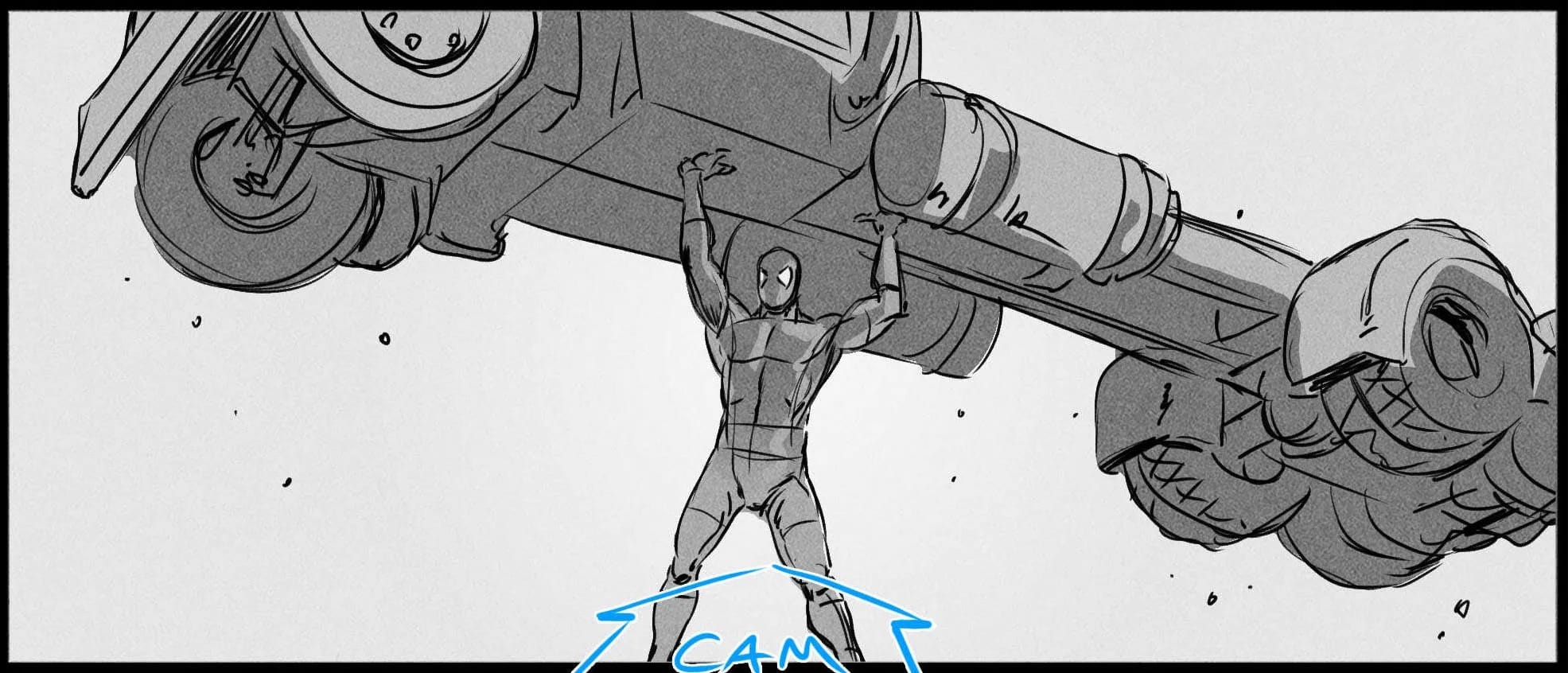
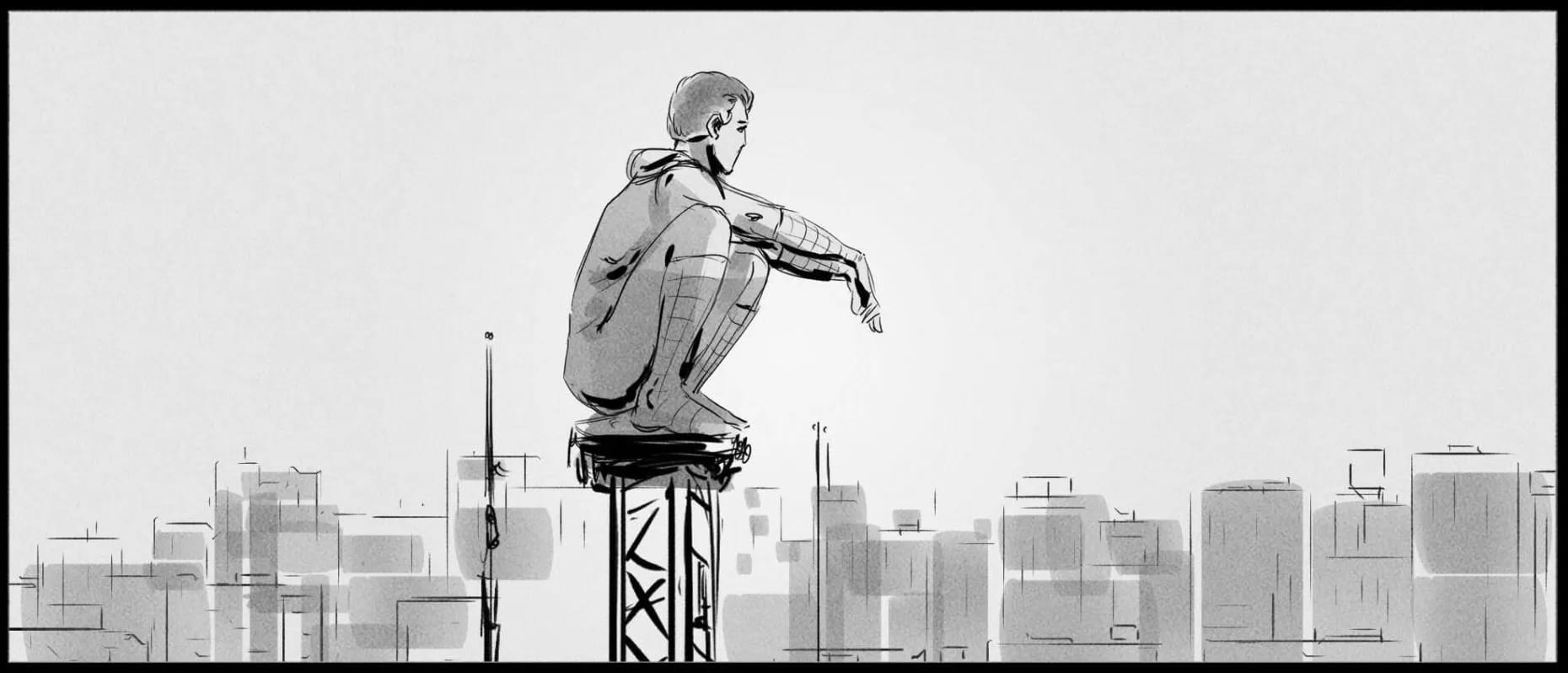
Storyboarding can be so many things: it’s not just 4 panels per page. It might be pages you tab through, but it might also be a diagram. It could be blocking - that’s also storyboarding. So you just learn to adapt, and that’s another important skill, to feel that out as you work with someone.
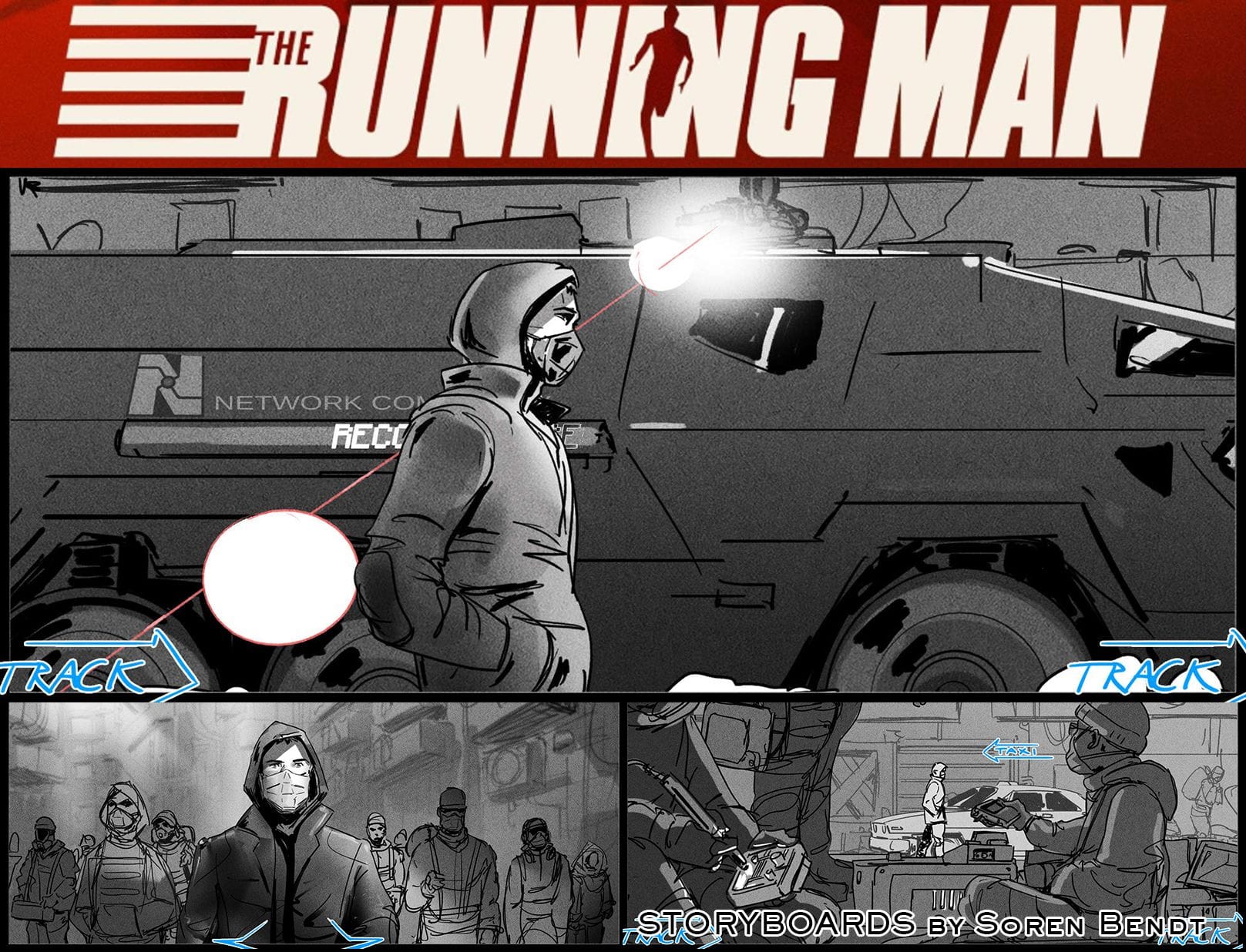
It’s so easy for people to understand a drawing, what it is and who did it. We have so many visual things that are so complicated that it’s hard for someone to understand what any one person actually did. Did you do lighting, did you do the models, did you do the camera? But here. It’s a sketch. It doesn’t have all the information in it. It doesn’t tell you exactly the distance that something is traveling, it doesn’t tell you how long it happens. But it helps people focus on what it is doing. It's telling the story. Is it telling the story or not? Is that the shot or not? It’s obvious that it’s an idea, it’s not committed, what other things can we do? It helps to narrow down everything.
Working on the Marvel movies, for example, as opposed to working on Edgar Wright films… Edgar does his own thumbnails, which is amazing. He locks in his script, and then you execute it, almost like an animation, and I think that’s why his style is so strong. Whereas on, like, Spiderman, it’s almost like every department is making almost a separate movie, and the director needs to walk around and communicate with each department individually, telling them over and over again what the movie is, but in their own language.
WA: What’s the best part of your job?
SB: The best part of my job is when you feel like you’re watching the movie together, or watching what the movie could be. When someone is talking, the movie starts playing in your head, but when it’s in your head you’re never quite sure if it’s the same movie or not. The sketches help all that to synchronize, and OH MY GOD we are watching the same movie in our heads. That connection is so amazing, and it generates all this excitement, and that’s what we’re doing and that’s what we like. And I think that energy carries forward into the finished movie, into what we see on screen, so that hopefully the audience can have a similar experience and be equally excited. Feeling that synchronization is the best feeling.
Another great part of my job is that I get to be involved in all the creativity of it, but the responsibility is off my shoulders. I can creatively come up with all kinds of things, I can make a fun little play room where the director can explore things, but I am completely shielded from the consequences.
You’re kind of attached at the hip to the director, which puts you pretty high in the hierarchy, and at the same time nobody really knows who you are. And then you just go and sit and draw. You really are deep in the machine, working with all the oils and getting all gunky, and showing up a little bit crazy after a couple days of no sleep with some great ideas. It’s kind of a cheat code for the director to explore a script that doesn’t exist yet. It offers some options where they can explore, and it’s fairly cheap and fairly fast, and can exist in its own little world. And I feel very at home in that world.
WA: And what’s the worst part of your job?
SB: The worst part of my job is that the industry is what it is. You’re a freelancer. It’s great when you are working, and worrying when you aren’t working. When you’re working you think of all the other things you would like to be doing, but when you aren’t working you don’t do those things because you are worried about not working. You can never feel comfortable in it, especially as you get older.
So I’m happy that I have done the things that have gotten me to where I am now. You have to be kind of young and overly ambitious and a bit naive to keep doing the work, and I’m grateful for that now. But it’s very hard to achieve job security, to feel safe. You have to constantly push away the insecurity and take a deep breath and remind yourself that you’ll be okay, that you’ve been in this position before. It’s just part of the industry, and it’s not a sign that you have somehow failed. Because of course it feels like failure, going from all the adrenaline of production to suddenly sitting on the couch and feeling like it’s all over.
WA: What are you working on now?
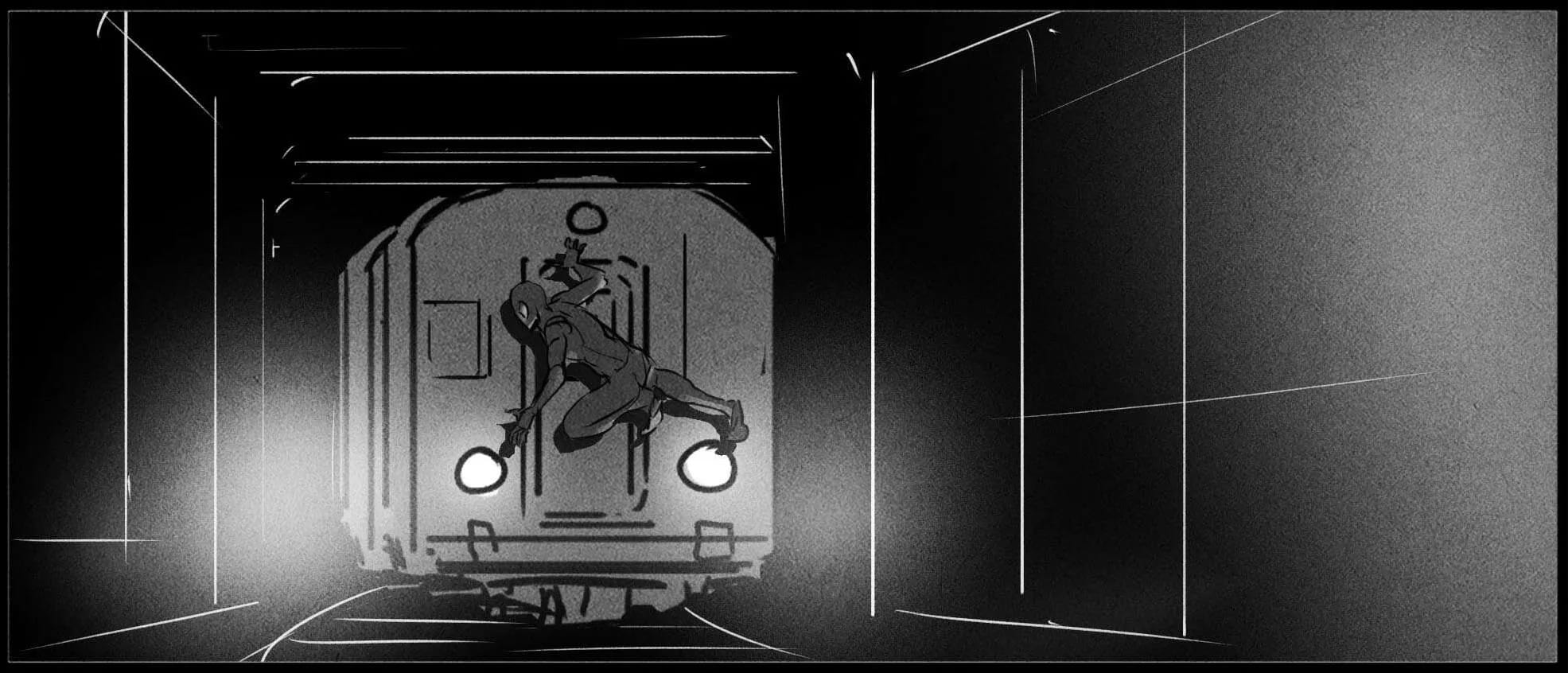
SB: I’m currently working with Paul King on his next project. Of course it’s under an NDA, so I can’t talk about it much. A lot of the work is very loose and rough so far, but I think it was Brad Bird who said “Not all shots are equal”, and that’s also true for storyboards. You find moments that really stand out as an exciting picture, and set the tone for the whole sequence.
I always try to keep that initial approach of the post-it notes, to keep it rough and nimble, but of course you get better and better over time, and of course I want to get better and better over time. If I’m never given enough time to do a good drawing, to capture a sense of the emotion, a sense of the lighting, then it’s hard to create something that gets me excited for the sequence. So I need to create those key moments in order to have a balance. You can see that in Edgar’s thumbnails, for example: here he isn’t really committed, it’s just some vague scribbles. But here he is really committed, he has a clear vision of it. So that’s the drawing I really focus on, because it’s the anchor point for the sequence, and I can marry everything into it.
Book Ticket Here
Another advantage of drawing is that you can almost do it live. I’ll be sitting with the director and we’ll be screensharing or I’ll have a piece of paper, and we’ll just do it in real time together. The very best thing is when the person picks up a pencil, and they contribute themselves. They also get a little respect for the craft of drawing, for figuring out how to visualize something. So yes, the drawing is important, but the communication around the drawing is more important.
Søren's nomination as 2026 Concept Art Association Finalist : https://conceptartassociation.substack.com/p/check-out-the-2026-concept-art-awards
Images: Courtesy of the rights holders
Photo: WeAnimate
wam#177